Rainwater Tanks in Australia: Types, Sizes, Installation and Uses
Australia has a long tradition of collecting and storing rainwater, especially in regions where rainfall is irregular or water restrictions are common. As the country experiences both extended dry periods and sudden heavy rainfall, many households choose to install rainwater tanks to increase their water security, reduce demand on the mains supply, and support sustainable water management.
This guide provides a comprehensive and easy-to-follow overview of rainwater tank materials, tank shapes, sizing considerations, installation requirements, maintenance steps, and typical household uses across Australia. It is designed to help homeowners, builders and anyone interested in understanding how domestic rainwater systems function.
1. Why Australians Use Rainwater Tanks
Australians adopt rainwater harvesting for several practical, environmental and financial reasons.
- Drought and Climate Variability: Australia’s climate is highly variable, with some regions experiencing long periods of drought followed by sudden heavy rainfall. Having a rainwater tank allows households to store water during wet periods to use during dry months.
- Reducing Household Water Bills: Using rainwater for non-potable uses – such as gardening, toilet flushing, or laundry – can significantly reduce mains water consumption. This can lead to noticeable savings, especially in areas with tiered pricing or seasonal water restrictions.
- Environmental Sustainability: Rainwater tanks reduce stormwater runoff, ease pressure on drainage systems, and support a more sustainable approach to water use. They also decrease reliance on treated drinking water for everyday tasks.
- Council or Building Requirements: Some local councils encourage or require rainwater systems in new residential builds as part of sustainability measures. In certain states, building regulations may require rainwater tanks to meet minimum capacity guidelines for certain types of dwellings.
2. Common Rainwater Tank Materials in Australia
Rainwater tanks come in a range of materials, and each option has advantages depending on climate, installation space and intended water use.
Polyethylene (Poly) Tanks
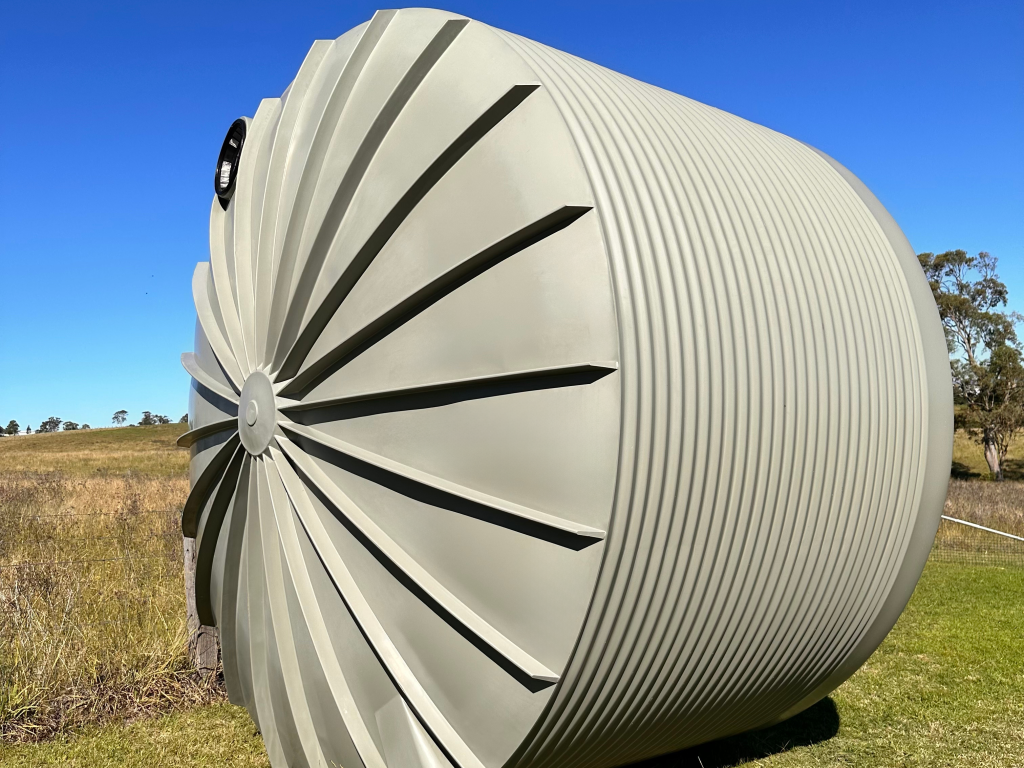
Poly tanks are among the most popular options in Australia because they are:
- Made from UV-stabilised, food-grade plastic
- Corrosion-resistant
- Lightweight and easy to transport
- Available in many colours and shapes
- Suitable for both urban and rural installations
Steel Tanks
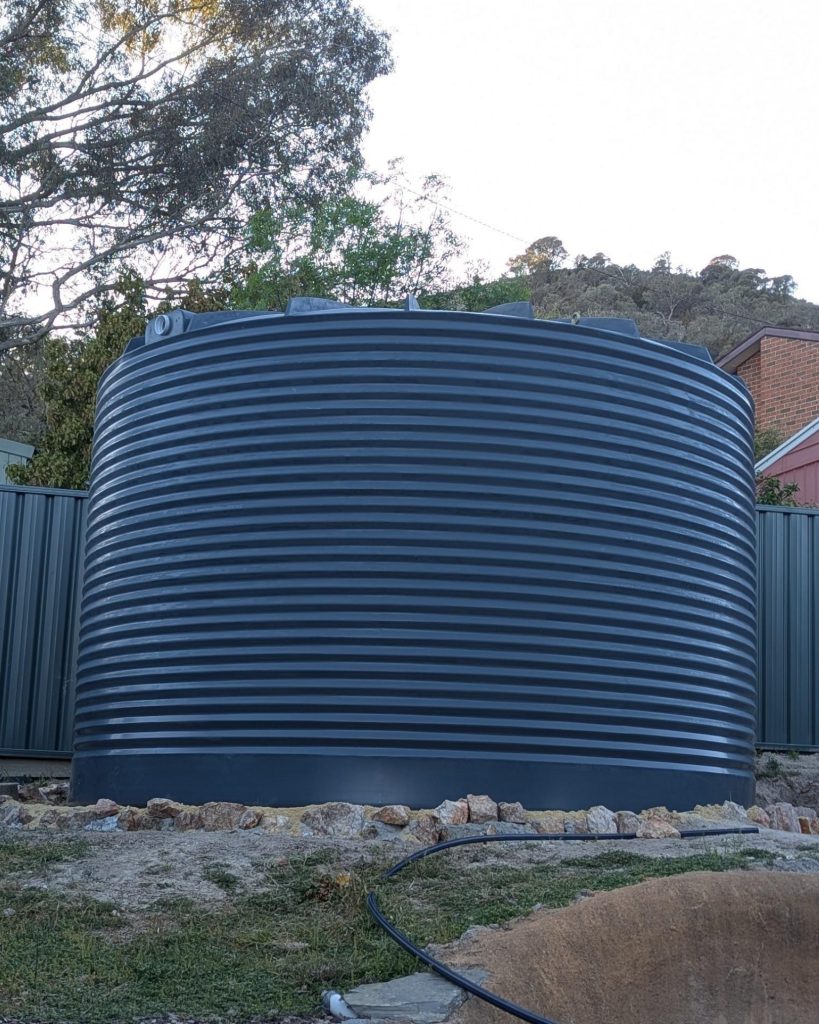
- Often made from galvanised or Colorbond® steel
- Good for large capacities
- Bushfire-resistant when fitted correctly
Concrete Tanks
- Very durable
- Usually installed in rural and agricultural settings
- Can be partly or fully buried

Fibreglass Tanks
- Lightweight and corrosion-resistant
- More common in commercial or industrial use
3. Tank Shapes and Configurations
Different tank shapes suit different property sizes and layouts.
Round Tanks
- Most cost-efficient shape for large volumes
- Used extensively in rural areas
- Common capacities range from 5,000 litres to over 30,000 litres
Slimline Tanks
- Designed for narrow spaces, such as beside houses or along fences
- Ideal for suburban and urban blocks
- Standard capacities range from 1,000 to 5,000 litres
Underground Tanks
- Installed below ground to maximise yard space
- Protected from sunlight and temperature changes
- Require excavation and careful installation planning
Under-Deck and Bladder Tanks
- Installed beneath raised homes, decks or flooring
- Utilise otherwise unused space
- Suitable where above-ground tanks are not feasible
4. Typical Tank Sizes for Australian Homes
Tank size is influenced by rainfall patterns, roof area, property layout and intended water use.
Roof Catchment Estimation
A common formula used across Australia is:
1 mm of rainfall on 1 m² of roof = approximately 1 litre of water collected.
This helps homeowners estimate how quickly a tank may fill based on their local climate.
| Home Type | Common Capacities | Notes |
| Urban home | 1,000-5,000 L | Garden, toilets, laundry |
| Suburban block | 5,000-10,000 L | Multiple household uses |
| Rural property | 10,000-30,000+ L | Household + agricultural |
Many properties connect multiple tanks to increase total storage.
5. Household Uses of Rainwater in Australia
Rainwater can support many household tasks, and its uses depend on filtration, plumbing and local regulations.
Outdoor Uses
Rainwater is commonly used for:
- Irrigation of lawns, vegetable gardens and plants
- Washing cars, tools and outdoor equipment
- General cleaning tasks
- Filling ponds or ornamental water features
Indoor Non-Potable Uses
With the right pump system and plumbing, rainwater can also supply:
- Toilet flushing
- Washing machine supply
- Some hot water systems (location-dependent)
Indoor use requires licensed plumbing work to ensure compliance and safety.
Bathroom Use
Rainwater may be suitable for showers and basins when:
- Appropriate filtration is installed
- Plumbing meets regulatory standards
- Systems are properly maintained
Drinking Water Use
Rainwater can be used for drinking if:
- Filtration and/or disinfection systems are installed
- Tanks and gutters are maintained
- Homeowners follow state health department advice
Each state offers specific advice for safe drinking use.
6. Components of a Rainwater Harvesting System
A complete system includes several essential components that work together to collect, filter, store and distribute water.
- Roof and Gutter Catchment: Clean roofing and well-maintained gutters improve water quality and reduce debris.
- Leaf Diverters and Strainers: These components help stop leaves, insects and debris from entering the tank.
- First-Flush Diverters: These devices capture initial runoff, which usually contains dust or organic matter.
- Tanks and Fittings: Inlets, outlets, screens and overflow pipes must be installed correctly to maintain water quality and ensure safe operation.
- Pump and Filtration System: If rainwater is used indoors or through irrigation systems, a pump provides the necessary pressure. Filters protect appliances and improve water clarity.
- Overflow and Stormwater Connections: Excess water must flow away from the tank’s foundation to prevent erosion or structural damage.
7. Installation Considerations
Proper installation is essential for safety and system longevity.
Base and Foundation
A suitable foundation is crucial. Tanks are typically installed on:
- A level concrete slab
- Compacted sand
- Crusher dust or reinforced base
Placement and Accessibility
Install tanks:
- Close to downpipes
- On stable, level ground
- With space for future inspection and maintenance
Plumbing and Compliance
All connections to household plumbing must comply with:
- Plumbing Code of Australia
- AS/NZS 3500 standards
- Local council requirements
Licensed plumbers must perform indoor connections and may be required for external works depending on the jurisdiction.
8. Maintenance and Water Quality
Routine maintenance helps ensure clean water and reliable system performance.
Recommended tasks include:
- Cleaning gutters and leaf diverters
- Checking mosquito-proof screens
- Inspecting first-flush diverters
- Maintaining filters and pumps
- Checking for sediment accumulation inside the tank
More frequent maintenance may be required if the water is used for drinking.
9. Environmental and Community Benefits
Rainwater tanks offer benefits that extend beyond the household:
- Reduced stormwater runoff and flooding impact
- Lower community water demand
- More sustainable garden and landscape irrigation
- Increased household resilience during dry periods
They also support broader environmental goals related to water conservation and climate adaptation.
References
About the Author
My name is Diana Tika Lestari, and I write educational articles about Australian rainwater systems, water efficiency, and home sustainability. I focus on providing neutral, fact-based explanations of tank types, sizing, installation considerations and household applications so readers can make informed decisions suited to their needs and location.
Disclaimer
This guide is published by Tankworld as a general educational resource.
It does not provide product recommendations or sales information.
It does not offer plumbing, engineering or regulatory advice.
Homeowners should consult licensed professionals and relevant state or council guidelines before installation or use.