Tanks -
24 July 2023
Ball Valves for Water Tanks: What They Do and Why They Matter
Ball valves are one of those small fittings that make a big difference to your water tank setup. They help control the flow of water in and out of your tank, pump, pipes or irrigation system. They are simple to use, reliable, and handy when you need to shut the water off quickly.
Whether you are setting up a new rainwater tank, replacing old fittings, or improving your pump system, a good quality ball valve can make maintenance easier and help your system run smoothly.
At Tankworld, we have been helping Australians with water storage solutions since 1972. With over 50 years of experience, we supply Australian-made poly water tanks and quality tank fittings across New South Wales, Victoria and South Australia.
What is a Ball Valve?
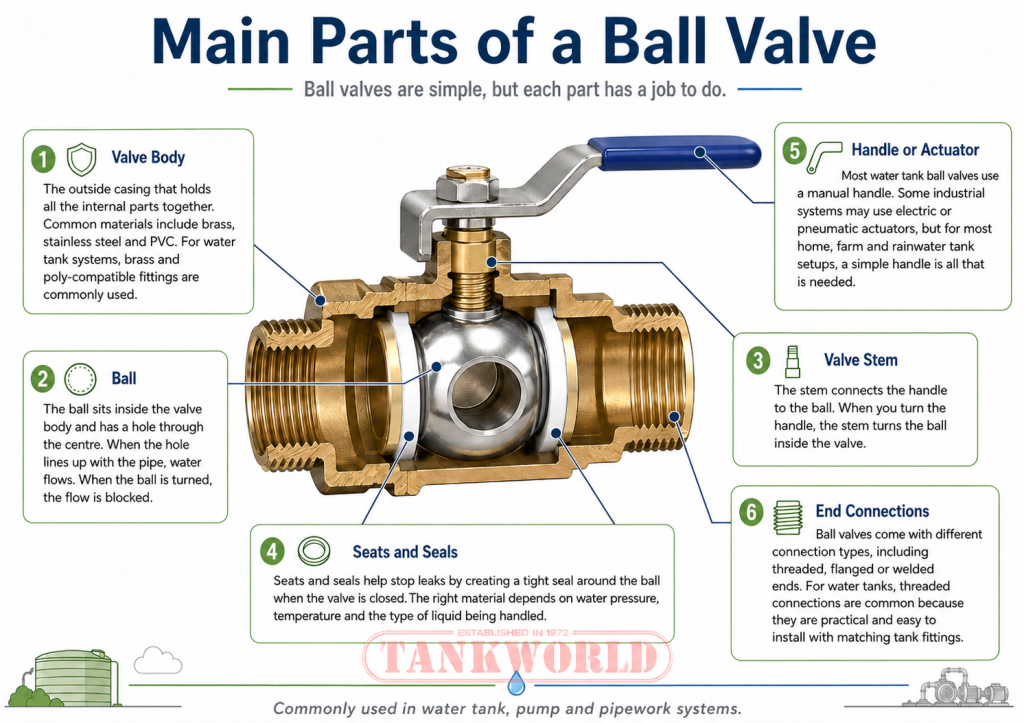
A ball valve is a type of valve used to start, stop or control water flow. Inside the valve is a round ball with a hole through the middle. When the handle is turned in line with the pipe, water flows through. When the handle is turned across the pipe, the ball blocks the flow.
It is a simple design, but it works very well.
That is why ball valves are commonly used with:
- Water tanks
- Rainwater pumps
- Garden irrigation
- Farm water systems
- Household plumbing
- Commercial and industrial water setups
Ball valves are popular because they are quick to open and close, easy to use, and suitable for many water tank applications.
Why Use a Ball Valve on a Water Tank?
A ball valve gives you better control over your water system. It can help you isolate part of the system, shut off water during maintenance, control flow to a pump, or stop water quickly in an emergency.
For example, if you need to clean a filter, replace a pump, or work on a pipe, you can close the ball valve instead of draining the whole tank or shutting down the entire system.
That makes life easier, especially on rural properties, farms, homes and commercial sites where water access matters.
Common Uses for Ball Valves with Water Tanks
Filling and Emptying a Tank
Ball valves are often used to control water going into or out of a tank. When filling a tank, the valve can be opened to allow water in. When the tank is full, the valve can be closed to stop the flow. The same applies when draining a tank for cleaning, repairs or maintenance. A ball valve gives you a quick and simple shut-off point.
Controlling Water Flow
A ball valve can help manage the flow of water from your tank to your pump, garden, troughs or household system. You can fully open the valve for maximum flow or partially close it to reduce the flow. This can be useful when you need more control over how water moves through your system.
Isolating a Pump or Section of Pipework
If your water tank is connected to a pump, a ball valve can be installed before or after the pump. This allows you to isolate the pump when needed. That means you can service or replace the pump without losing unnecessary water from the tank or disturbing the rest of the system.
Emergency Shut-Off
Leaks can happen. Pipes can burst. Pumps can fail. A ball valve gives you a fast way to shut off water and reduce damage. Because ball valves usually operate with a simple quarter turn, they are quick and easy to use when you need to act fast.
Winter Maintenance
In colder areas, water left in pipes and fittings can freeze and cause damage. A ball valve can help you isolate and drain part of your system before cold weather hits. This is especially useful for exposed pipework, irrigation lines and pump connections.
Types of Ball Valves
There are several types of ball valves. The right one depends on your system and how much control you need.
1. Full Bore Ball Valve
A full-bore ball valve has an opening that is about the same size as the pipe. This allows strong water flow with less restriction. Full-bore valves are a good option where flow rate matters, such as pump lines or larger water outlets.
2. Reduced Bore Ball Valve
A reduced bore ball valve has a smaller opening than the pipe. It may reduce flow slightly, but it is often more compact and cost-effective. This can be suitable for general water control where maximum flow is not essential.
3. Floating Ball Valve
A floating ball valve uses water pressure to help seal the ball against the valve seats. This is a common design and works well in many everyday water systems.
4. Trunnion-Mounted Ball Valve
A trunnion-mounted ball valve has extra support for the ball. These are usually used in larger, higher-pressure systems rather than standard domestic rainwater tank setups.
5. V-Port Ball Valve
A multi-port ball valve can direct water in more than one direction. These are useful in systems where water needs to be diverted between different lines.
6. Multi-Port Ball Valve
A multi-port ball valve can direct water in more than one direction. These are useful in systems where water needs to be diverted between different lines.
Benefits of Ball Valves
Ball valves are popular because they are practical and reliable. Some key benefits include:
- Quick Shut-Off: A ball valve can usually be opened or closed with a simple quarter turn. This makes it ideal for fast shut-off during maintenance or emergencies.
- Easy to Use: The handle position makes it easy to see whether the valve is open or closed. If the handle is in line with the pipe, it is usually open. If it is across the pipe, it is closed.
- Reliable Sealing: A good-quality ball valve provides a tight seal, helping to reduce leaks and water loss.
- Suitable for Many Water Systems: Ball valves can be used in residential, rural, agricultural and commercial water systems. They are a handy choice for rainwater tanks, pumps, irrigation and general plumbing.
- Long Service Life: When installed correctly and matched to the right system, ball valves can last for many years. Regular checks and basic maintenance can help keep them working properly.
Applications of Ball Valves
Ball valves are used in many industries because they are simple, reliable and easy to operate. For Tankworld customers, they are most commonly used with rainwater tanks, pumps, irrigation systems, farm water setups and general plumbing. But the same basic valve design is also used across larger commercial and industrial systems.
1. Water Tanks and Rainwater Systems
Ball valves are commonly fitted to water tanks to control water flow from the outlet, pump or connected pipework. They make it easy to shut off water when cleaning a tank, replacing fittings, servicing a pump or carrying out general maintenance.
For the right setup, check our water tank outlet fittings, water tank pumps, and brass valves and outlets.
2. Irrigation and Farm Water Systems
On rural properties and farms, ball valves are handy for controlling water to troughs, gardens, irrigation lines and storage tanks. They allow quick shut-off when moving water between different areas or working on pipework.
3. Water and Wastewater Treatment
Ball valves are widely used in water distribution, treatment plants and wastewater systems because they can handle regular operation and provide reliable shut-off. Their simple design makes them a practical choice where water flow needs to be managed safely and efficiently.
4. HVAC Systems
In heating, ventilation and air conditioning systems, ball valves help control the flow of water and refrigerants. They are often used where quick shut-off or simple flow control is needed for maintenance and temperature management.
5. Oil, Gas and Industrial Systems
Ball valves are also used in oil, gas, petrochemical and chemical processing systems. In these environments, they help control the flow of liquids, gases and other materials. These applications usually require valves with specific pressure ratings, materials and seals.
6. Food, Pharmaceutical and Marine Applications
Ball valves are also found in food processing, pharmaceutical facilities and marine systems. They are used because they offer smooth operation, reliable sealing and easy control of fluid movement.
Choosing the Right Ball Valve for Your Tank
Not all ball valves are the same. Before choosing one, it is worth checking a few key things.
- Valve Size: Choose a valve that suits your pipe size, tank outlet or pump connection. Using the wrong size can restrict flow or make installation harder.
- Material: The valve material should suit the water and the environment. For rainwater tank systems, brass and suitable poly-compatible fittings are common options.
- Pressure Rating: Make sure the valve can handle the pressure in your system. This is especially important when the valve is connected to a pump.
- Connection Type: Check whether your system needs threaded, flanged or another type of connection. Most tank setups use threaded fittings, but it depends on your tank and pipework.
- Flow Requirements
If you need maximum water flow, a full-bore ball valve may be the better choice. If you only need a simple shut-off, a standard reduced bore option may be suitable.
Ball Valves and Tankworld Water Tanks
At Tankworld, our water tanks are built for tough Australian conditions. Our Australian-made poly tanks are UV-stabilised and designed for long-term outdoor use. We offer a wide range of tank sizes, from 330 litres to over 47,750 litres, making it easier to find the right tank for your home, farm, business or rural property.
Our tanks are available across New South Wales, Victoria and South Australia, and come with a 7-year warranty for peace of mind.
When paired with the right fittings, valves and outlets, your tank system becomes easier to use, maintain and manage. For related products, you can link to:
Best Selling Ball Valves and Fittings
These fittings can be useful for tank outlets, pump connections, fire fittings, rural water setups and general water control.
Need Help Choosing the Right Ball Valve?
Choosing the right ball valve depends on your tank size, outlet size, pump setup and how you plan to use the water. Tankworld has been supplying water tanks and tank fittings since 1972, so our team can help you find a practical option for your setup. Whether you are installing a new rainwater tank, upgrading an existing system, or replacing old fittings, we can point you in the right direction.
FAQs About Ball Valves
What does a ball valve do?
A ball valve controls water flow through a pipe or fitting. It can be used to turn water on, shut it off, or reduce the flow.
Can I use a ball valve on a rainwater tank?
Yes. Ball valves are commonly used on rainwater tanks to control water flow from the outlet, pump or connected pipework.
Where should a ball valve be installed?
A ball valve is often installed at the tank outlet, near a pump, before filters, or anywhere you need a reliable shut-off point.
What size ball valve do I need?
The valve size should match your tank outlet, pipe size or pump connection. If you are unsure, check your existing fittings or ask the Tankworld team for help.
Are brass ball valves suitable for water tanks?
Brass ball valves are commonly used in water tank systems. They are strong, practical and suitable for many general water applications.
How long does a ball valve last?
A quality ball valve can last for many years when installed correctly and used within its pressure and temperature rating.
Can a ball valve control water pressure?
A ball valve can help reduce or manage flow, which may affect pressure in some systems. For precise pressure control, you may also need a pressure regulator.
Final Thoughts
Ball valves are a simple but important part of many water tank systems. They help you control water flow, isolate parts of your setup, protect pumps, carry out maintenance and shut water off quickly when needed.
When matched with a quality Australian-made Tankworld water tank, the right fittings can make your whole system more reliable and easier to manage. For help choosing ball valves, outlets, pumps or rainwater tanks, contact Tankworld today.