Fire-Fighting Tank -
16 December 2025
Bushfire Season 2026
How to Prepare Your Property With the Right Water Storage
(Updated guide for Australian homeowners and rural properties)
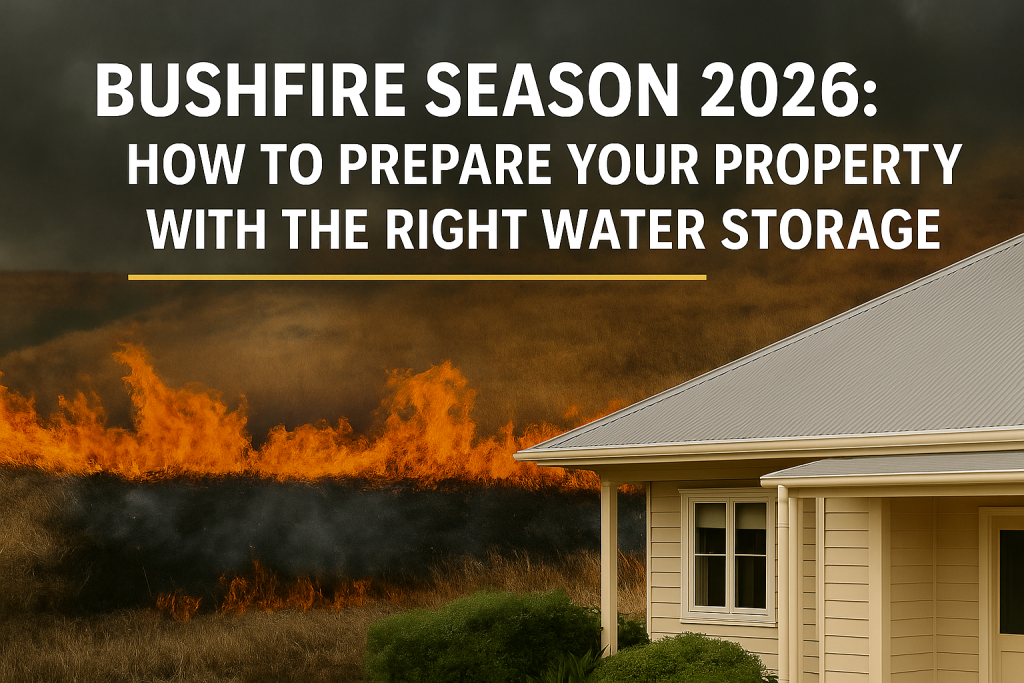
Australia continues to face longer and more intense bushfire seasons. Whether you live on acreage or on the fringe of town, preparing your home and having enough water storage can dramatically improve your fire readiness.
Tankworld works closely with customers across Victoria, New South Wales and South Australia who want peace of mind heading into bushfire season. This updated 2025 guide combines practical preparation steps, tank recommendations and expert pump advice.
Why Bushfire Preparation Matters More Than Ever
Recent years have shown:
- Bushfires are moving faster
- Fire seasons are starting earlier
- Rural fringe homes are increasingly affected
- The mains water supply cannot be relied on during fire events
A dedicated firefighting water supply gives you a crucial buffer when every minute matters.
How Much Water Do You Need for Bushfire Protection?
Most Australian fire authorities recommend:
- At least 10,000 litres of dedicated bushfire water storage.
- For high-risk regions or rural properties with additional structures, many homeowners choose 20,000–30,000 litres.
Ideal tanks include:
- 10,000L Round Corrugated Tank
- 23,650L Round Corrugated Tank
- 25,000L Round Corrugated Tank
Why Poly Water Tanks Perform Better in Bushfires
Steel tanks may appear strong, but extreme heat can distort their shape or collapse internal liners.
Quality poly water tanks often perform better because they:
- Resist radiant heat
- Don’t rust or corrode
- Have seamless, one-piece construction
- Require minimal maintenance
- Hold structural integrity when exposed to embers
👉Explore bushfire-ready fire tanks packages here:
Firefighting Pumps🚒: What You Must Have
A tank is only useful if you can move the water.
✔ Firefighting Pump (High-Pressure Pump) Essential for:
- Running firefighting hoses
- Defending your home before an ember attack
- Operating rooftop or perimeter sprinkler systems
Many rural properties pair it with a Household Pressure Pump, keeping indoor water running while preserving an emergency supply.
👉 Browse pumps here
How to Prepare Your Home to Prevent Bushfires (2026 Guide)
These are practical, government-supported actions you can take now to reduce risk.
1. Clear gutters and roof valleys
Dry leaves and bark ignite quickly. Cleaning gutters regularly removes ember fuel. CFA Guide
2. Maintain a defendable space around your home
Keep grass short, remove debris, trim branches and avoid storing wood piles near the house. NSW RFS Standards
3. Seal gaps and remove flammable materials
Close gaps under eaves, decks and doors to prevent ember entry. Store outdoor furniture away from the house during high-risk days.
4. Check access for emergency services
Make sure driveways, gates and property markers are clear and accessible for fire trucks.
5. Prepare a dedicated firefighting water supply
A separate tank with a high-pressure fire pump ensures water is available even when mains lines are under strain.
Recommended reading:
👉 Do You Need a Pump With Your Water Tank? Full Setup Guide (2025)
6. Create or update your Bushfire Survival Plan
Government authorities offer step-by-step planning tools. CFS (South Australia) Guide
7. Install ember guards & mesh screens
These reduce the risk of embers entering roof spaces or underfloor areas – one of the top causes of house loss.
8. Consider rooftop or perimeter sprinkler systems
When connected to a fire pump and dedicated tank, sprinklers add a passive layer of protection.
👉Explore compatible tanks here
📍 Our Water Tank Factory
Your tank will be delivered from one of our Australian manufacturing facilities:
- Swan Hill, Victoria
- Rutherford, New South Wales
- Murray Bridge, South Australia
Delivery typically takes 4–8 weeks.
Quick Comparison: Choosing the Right Setup
-
Sale
Product on sale
23,650L Corrugated Tank and 6.5HP Briggs & Stratton Single Stage Fire Pump and Hose Kit
$4,005.00 – $4,280.00
$4,005.00 – $4,280.00
$4,230.00 – $4,505.00
-
Sale
Product on sale
15,000L Corrugated Tank and 6.5HP Briggs & Stratton Single Stage Fire Pump and Hose Kit
$3,285.00 – $3,560.00
$3,120.00 – $3,395.00
$3,285.00 – $3,560.00
-
Sale
Product on sale
10,000L Round Corrugated Tank and 6.5HP Briggs & Stratton Single Stage Fire Pump and Hose Kit
$3,060.00 – $3,225.00
$3,060.00 – $3,225.00
$3,220.00 – $3,385.00
-
Sale
Product on sale
BIA-MH215SHP – Bianco Vulcan Engine Driven Fire Pump – Powered by Honda GX200
$2,200.00
$2,750.00
$2,200.00
$2,750.00
$2,200.00
$2,750.00
📞Prepare Your Property, Before Fire Season Arrives
Our team can help you choose a bushfire-safe tank and pump combination based on your property layout. 👉 Contact Tankworld for Advice
FAQ – Bushfire Preparation
1. How much water should I store for bushfire protection? Most fire authorities recommend at least 10,000 litres of dedicated firefighting water storage. Rural properties or homes with larger structures often choose 20,000–45,000 litres for added security.
2. Do I need a special type of pump for bushfire protection? Yes. A high-pressure firefighting pump is essential for running hoses and sprinkler systems. Standard household pumps are not strong enough to protect a property during a bushfire.
3. Are poly water tanks suitable for bushfire zones? Yes. Quality poly tanks often perform better than steel tanks in bushfires because they resist radiant heat, have no internal liners and don’t corrode. Tankworld poly tanks are made from UV-stabilised, food-grade materials built for Australian conditions.
4. Can mains water be relied on during a bushfire? Not always. Water pressure can drop significantly or be cut off entirely during bushfire emergencies. That’s why having a dedicated tank with a fire pump is strongly recommended.
5. Where should I place my water tank for the best protection? Place your tank in an open, accessible area with 3–5 metres of clearance from vegetation. Keep a pump cover over your firefighting pump to protect it from heat and debris.
6. Do rooftop or perimeter sprinkler systems help in bushfires? Yes. When connected to a fire pump and a dedicated water tank, sprinkler systems can help reduce ember attack and radiant heat on windows, walls and roofs.
7. What home maintenance steps reduce bushfire risk? Regularly clean gutters, clear dry vegetation, trim trees, seal gaps around the home and remove flammable materials. Government resources like CFA, RFS and CFS provide detailed guides.
8. How early should I prepare for bushfire season? Start preparing in late winter or early spring. Bushfire seasons have become longer and more unpredictable, so early preparation is essential.
Digital Marketing Coordinator at Tankworld, specialising in SEO, advertising, and brand growth for Australia’s leading water tank manufacturer. With over 7 years of digital marketing experience, a Bachelor of Communication, and a passion for sustainable living, Diana helps Australians discover smarter water-saving solutions.