Water Saving -
12 November 2025
Poly vs Steel Water Tanks: Which One Is Right for You?
Home » Poly vs Steel Water Tanks
If you’re comparing poly and steel water tanks, you’re already asking the right question.
Both options are used across Australia, and both can work depending on your setup. But for most homes, especially across New South Wales, Victoria, and South Australia, the decision usually comes down to practicality.
In short, poly water tanks are better for most homes, while steel tanks are better suited to large-scale or specialised applications.
Which Water Tank Is Better: Poly or Steel Water Tanks?
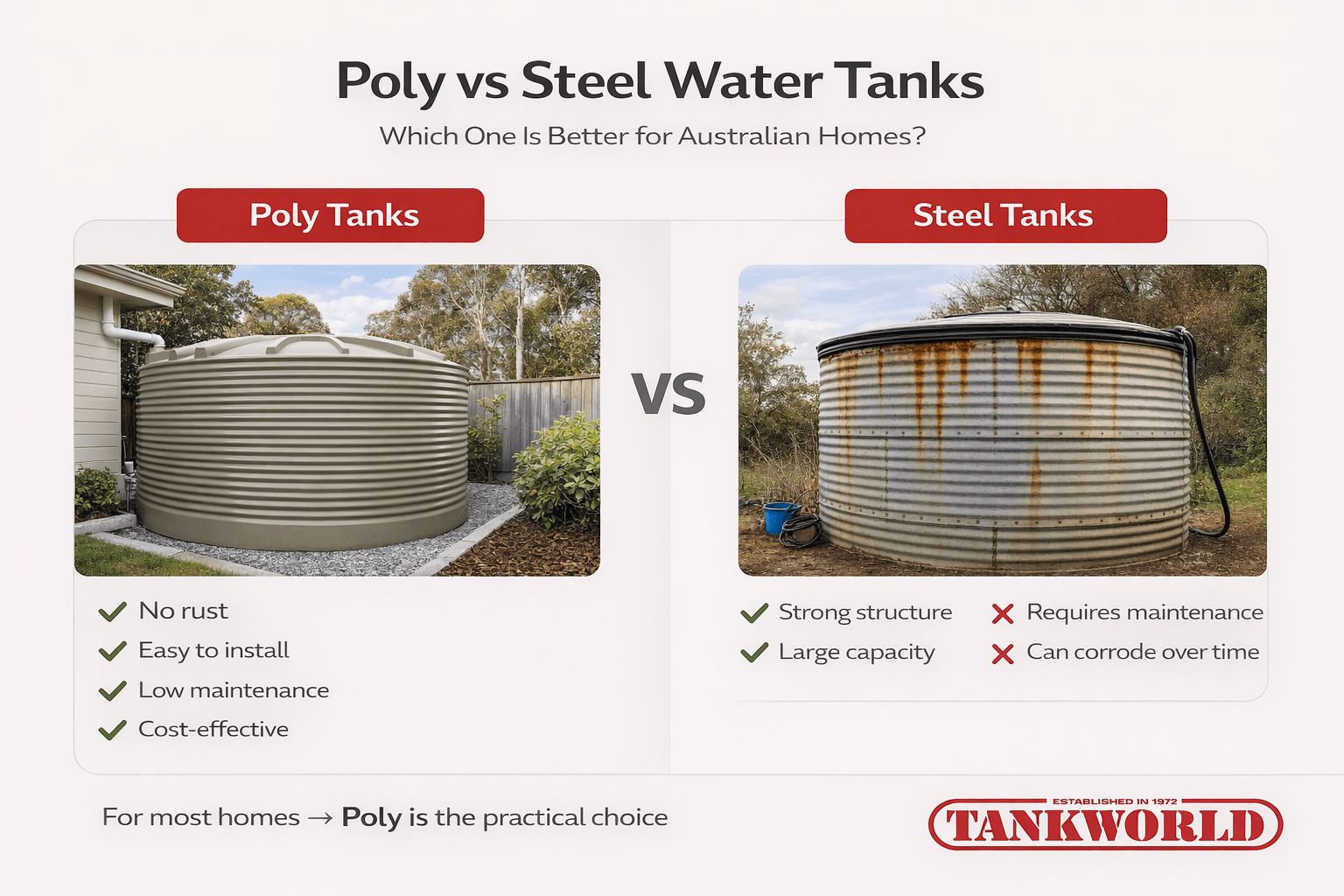
For most Australian homes and farms, poly water tanks are the better choice.
They are easier to install, require less maintenance, and do not rust or corrode over time. This makes them more practical for everyday use, especially in suburban and rural properties.
Steel water tanks are still a good option for large-scale or specialised applications, such as industrial sites or fire water storage, where strength and capacity are the main priority.
👉 In simple terms:
- Choose poly tanks for homes, farms, and general use
- Choose steel tanks for large or specialised systems
Why the Tank Material Actually Matters
The material you choose affects more than just the look of your tank.
It directly impacts:
- How long does it last?
- How much maintenance does it need?
- How easy it is to install
- And how much it costs over time
Steel tanks were traditionally seen as the tough, heavy-duty option. But modern poly tanks are now designed specifically for Australian conditions, which is why more homeowners are choosing them.
Poly Water Tanks – The Practical Choice for Most Homes
Poly tanks are made from UV-stabilised, food-grade polyethylene. In simple terms, they’re built to handle sun, weather, and daily use without needing much attention.
They’ve become especially popular in suburban and rural areas across New South Wales, Victoria, and South Australia, where ease of installation and long-term reliability matter.
What makes poly tanks appealing?
- No rust or corrosion, even in coastal areas
- Lightweight and easy to install
- Lower upfront cost
- Minimal maintenance required
- Available in a wide range of sizes and shapes
From slimline tanks for tight suburban spaces to large round tanks for rural properties, poly tanks cover almost every use case.
👉 Explore our full range of water tanks
💡 One thing many people don’t realise is how well poly tanks handle the Australian climate. Modern tanks are UV-stabilised, so they won’t crack or fade the way older materials used to.
When to Choose Poly Tanks
Poly tanks are usually the better option if:
- You’re installing a tank at a residential property
- Space is limited, and you need a slimline design
- You want a quick and simple installation
- You prefer low maintenance over time
They are also widely used in rural areas where collecting and storing rainwater is essential.
Steel Water Tanks – Where They Still Fit
Steel tanks are still used across Australia, particularly in larger or more specialised setups.
They are often chosen for:
- Large agricultural properties
- Industrial and commercial sites
- Fire water storage systems
- High-capacity installations
They can handle large volumes of water and are suited to situations where scale and structural strength are critical.
The Trade-Offs with Steel Tanks
Steel tanks are strong, but they do come with a few considerations:
- Higher upfront cost
- Heavier and more complex installation
- Ongoing maintenance required
- Risk of corrosion if not properly maintained
For some properties, this is manageable. But for many homeowners, it adds extra work and cost over time.
What Is a Poly Water Tank and What Is a Steel Water Tank?
A poly water tank is made from UV-stabilised polyethylene and is designed to resist rust, corrosion, and harsh weather conditions. It is commonly used for homes, farms, and general water storage.
A steel water tank is made from galvanised or coated steel and is typically used for large-scale water storage where strength and capacity are required.
Poly vs Steel Water Tanks Comparison
If you strip it back, the difference looks like this:
| Feature | Poly Water Tanks | Steel Water Tanks |
| Durability | 15–25 years (UV-stabilised) | 20–30 years (with coating) |
| Corrosion Resistance | No rust or corrosion | Strong but can corrode |
| Installation | Easy and lightweight | Heavier and more complex |
| Fire Resistance | Low | Excellent |
| Cost | More affordable | Strong but can corrode |
| Maintenance | Very low | Regular inspection needed |
| Eco-Friendly | 100% recyclable plastic | Recyclable, but high production energy |
| Best Use | Homes, farms, and general use | Large-scale or industrial |
Poly vs Steel Water Tanks: Key Differences
- Poly tanks are better for low maintenance and everyday use
- Steel tanks are better for very large or specialised storage
- Poly tanks do not rust, while steel tanks require maintenance
- Poly tanks are easier and cheaper to install
- Steel tanks are stronger but come with higher long-term upkeep
What Is the Best Water Tank for Your Home?
If you’re choosing a water tank for a typical Australian home, a poly water tank is usually the best option.
It offers:
- Lower upfront cost
- Minimal maintenance
- Reliable performance in Australian weather
Steel tanks are more suitable for larger properties or specialised uses where capacity and structural strength are critical.
👉 Browse our water tanks range
Regional Tank Insights
Across New South Wales, Victoria, and South Australia, we’ve seen a clear trend.
- In cities and suburban areas, slimline poly tanks are the most common choice
- In regional areas, large round poly tanks are widely used for rainwater storage
- In more specialised or high-demand setups, steel tanks still play a role
Your location, climate, and available space all play a part in what works best.
Final Thoughts
Both poly and steel tanks have their place. The right one depends on how you plan to use it.
But for most Australian homes and farms, poly tanks offer the best balance of cost, durability, and ease of use.
The key is choosing a tank that fits your setup, not just what sounds strongest on paper.
FAQs
Which water tank is better, poly or steel water tanks?
Poly water tanks are better for most homes and farms because they are easier to install, require less maintenance, and do not rust. Steel tanks are better suited for large-scale or specialised applications.
Do poly water tanks last as long as steel tanks?
Yes, high-quality poly water tanks can last 15 to 25 years or more when properly installed. While steel tanks can also last a long time, poly tanks offer reliable performance without the risk of corrosion.
Are steel water tanks stronger?
Steel water tanks are structurally stronger, especially for large-scale storage. However, poly tanks are more resistant to rust, corrosion, and environmental damage, making them more practical for everyday use.
Which water tank is cheaper, poly or steel?
Poly water tanks are generally more affordable both upfront and over time. Steel tanks usually have higher purchase and installation costs, along with ongoing maintenance requirements.
Are poly tanks safe for drinking water?
Yes, poly water tanks are made from food-grade polyethylene and are safe for storing drinking water when properly maintained.
What is the best water tank for a home in Australia?
For most Australian homes, a poly water tank is usually the best option because it offers lower maintenance, easier installation, and strong durability in Australian weather conditions.
Ready to Upgrade Your Water Storage?
👉 Browse Tankworld’s full range of water tanks designed for Australian conditions.
Our Best Selling Water Tanks
-
$2,795.00 – $3,070.00
$2,795.00 – $3,070.00
$3,020.00 – $3,295.00
-
$940.00 – $1,105.00
$940.00 – $1,105.00
$940.00 – $1,105.00
-
$965.00 – $1,075.00
$965.00 – $1,075.00
$1,040.00 – $1,150.00
-
$1,840.00 – $2,005.00
$1,840.00 – $2,005.00
$1,840.00 – $2,005.00
Author
Digital Marketing Coordinator at Tankworld, specialising in SEO, advertising, and brand growth for Australia’s leading water tank manufacturer. With over 7 years of digital marketing experience, a Bachelor of Communication, and a passion for sustainable living, Diana helps Australians discover smarter water-saving solutions.