Water Tanks Guide -
09 March 2026
Safe Rainwater Storage for Australian Homes
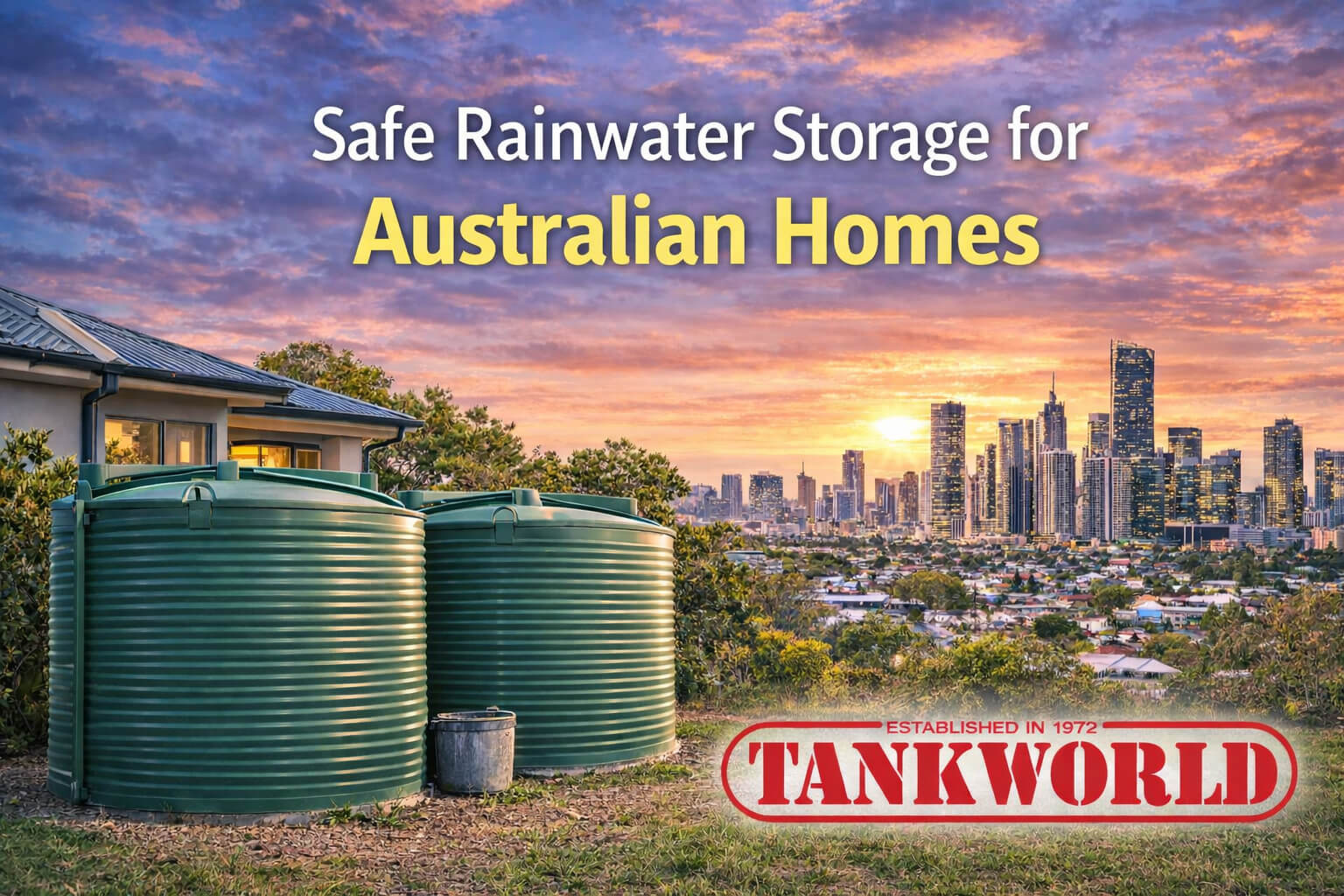
Rainwater storage for homes is becoming increasingly important across Australia, helping households reduce reliance on mains water and improve water security. A properly designed system not only collects rainwater efficiently but also keeps it clean and safe for everyday use.
This guide explains how rainwater is stored, how to keep it safe, and what systems work best for Australian homes.
On this page
What Is Rainwater Storage for Homes?
Rainwater storage for homes is the process of collecting rainwater from roofs and storing it in tanks for later use. This water can be used for gardens, washing, irrigation and, in some cases, household supply.
How Rainwater Is Collected and Stored
A typical rainwater harvesting system collects water from the roof and directs it into a storage tank through gutters and downpipes.
The system usually includes a roof catchment, guttering, filtration components and a storage tank. Many homeowners choose rainwater tanks for homes made from durable polyethylene, designed for Australian conditions.
Why Safe Storage Matters
Rainwater is clean when it falls, but it can collect debris from roofs and gutters. Without proper storage, water quality can be affected.
Common contaminants include dust, leaves, bird droppings and insects. A well-designed system reduces these risks and keeps water usable for longer.
Why Poly Water Tanks Are Popular
Polyethylene tanks are widely used for residential rainwater storage because they are durable, lightweight and safe for storing water.
They are resistant to UV exposure, corrosion and harsh weather, making them suitable for long-term outdoor use.
Do You Need a Pump for Rainwater Systems?
If rainwater is used for household supply, irrigation or outdoor taps, a pump is usually required to maintain water pressure.
Explore suitable rainwater pump systems or consider tank and pump packages for a complete setup.
How to Store Rainwater Safely at Home
- Install a suitable rainwater tank
Choose a tank size based on your household needs and available space.
- Connect the roof catchment
Ensure gutters and downpipes direct water efficiently into the tank.
- Add filtration components
Install first flush diverters and inlet strainers to remove debris.
- Install a pump if needed
Use a pump to supply water to taps, irrigation or household systems.
- Ensure overflow management
Install overflow systems to safely direct excess water.
- Maintain the system
Clean gutters, check filters and inspect the tank regularly.
Recommended Tank Sizes for Homes
| Household Type | Recommended Tank Size |
|---|
| Small homes or garden use | 2,000L – 5,000L |
| Average households | 10,000L – 25,000L |
| Large homes or rural properties | 25,000L – 47,750L |
Benefits of Rainwater Storage
Installing a rainwater system can help reduce water bills, provide a backup supply and improve water independence. It also supports sustainable water use and reduces stormwater runoff.
Rainwater Storage FAQs
Is rainwater storage safe for homes in Australia?
Yes, rainwater storage is safe when systems are properly installed and maintained.
Using sealed tanks, filtration systems and regular maintenance helps keep water clean and suitable for household use.
How do you store rainwater safely at home?
Rainwater is stored safely by using a sealed rainwater tank, installing first flush diverters and inlet strainers, and maintaining gutters and filters. Regular inspection helps prevent contamination.
What size rainwater tank do I need for a home?
Most homes use tanks ranging from 2,000L to 10,000L, depending on roof size and water usage.
Larger households or rural properties may require 10,000 L to 25,000 L or more.
Do rainwater tanks need a pump for home use?
A pump is usually required if rainwater is used inside the home or for irrigation systems.
Pumps help maintain pressure and ensure consistent water flow.
How long can rainwater be stored in a tank?
Rainwater can be stored for long periods if the tank is sealed and properly maintained.
Clean systems with filtration can keep water usable for months or longer.
What is the best tank material for rainwater storage?
Polyethylene tanks are commonly used because they are durable, UV-resistant and safe for storing water in Australian conditions.
How do you keep rainwater clean in a storage tank?
Keeping rainwater clean involves using first-flush systems, inlet strainers, and overflow management, along with regular maintenance of gutters and tank components.
Learn More About Rainwater Systems
For a deeper breakdown, see our guide on rainwater tank safety and how to maintain clean water systems.
Digital Marketing Coordinator at Tankworld, specialising in SEO, advertising, and brand growth for Australia’s leading water tank manufacturer. With over 7 years of digital marketing experience, a Bachelor of Communication, and a passion for sustainable living, Diana helps Australians discover smarter water-saving solutions.