Water Saving -
07 November 2025
The Complete Guide to Choosing the Right Water Tank
Home » Guide to Choosing the Right Water Tank
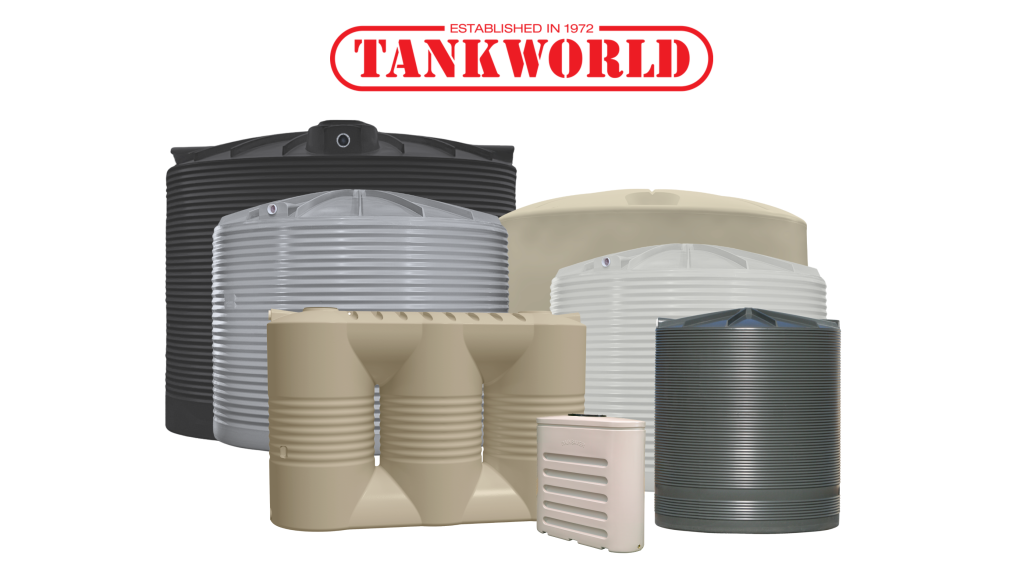
Australia’s climate makes water one of our most valuable resources. With rising water bills and frequent droughts, installing a water tank is no longer just an option; it is a smart long-term investment.
Whether you live in New South Wales, Victoria or South Australia, a well-chosen tank can help reduce your water bills, improve drought resilience, and support bushfire preparedness.
This guide covers everything you need to know, from tank sizes and materials to installation, costs and rebates, so you can confidently choose the right system for your property.
👉 Browse our full range of water tanks for sale designed for Australian homes, farms and businesses.
What is the Best Water Tank for Australian Homes?
The best water tank depends on your space, water usage and property type.
- Most Australian homes use 5,000L to 10,000L poly water tanks
- Rural properties often require 20,000L or larger tanks
- Smaller households or gardens may only need 1,000L to 3,000L
👉 Most households choose a 5,000L to 10,000L system, but you can explore all rainwater tanks systems in Australia to find the right fit.
What is a Water Tank?
A water tank is a storage container designed to collect and hold water for later use. In Australia, tanks are primarily used for:
- Household water supply
- Toilets and laundry systems
- Garden irrigation
- Rainwater harvesting
- Bushfire reserves
- Rural and livestock water supply
According to the Australian Bureau of Statistics, nearly 30% of households use a rainwater tank.
How to Choose the Right Water Tank (Step-by-Step)
Step 1: Choose the Right Tank Size
The right water tank size depends on your roof area, rainfall and water usage. Small homes often use 1,000L to 5,000L tanks, while larger homes and rural properties may need 10,000L to 20,000L or more.
Your tank size depends on:
- Roof catchment area (bigger roof = more rainwater collection).
- Local rainfall
- Water usage
Water Tank Sizes & Price Guide (Australia)
| Tank Size | Capacity Range | Price Range | Best For |
|---|
| Small Tanks | 330L – 1,000L | $350 – $560 | Gardens, small households |
| Small to Medium Tanks | 1,000L – 5,000L | $430 – $1,720 | Small homes, light water use |
| Medium Tanks | 5,000L – 10,000L | $1,520 – $1,690 | Average suburban homes |
| Medium to Large Tanks | 20,000L – 25,000L | $2,340 – $3,045 | Larger homes, families |
| Large Tanks | 30,000L – 47,750L+ | $5,400 – $7,400 | Rural properties, farms, off-grid |
💡 Tip: Larger tanks usually offer better value per litre, especially for rural and high-usage properties. Prices vary based on tank shape, colour, delivery and installation.
Hidden Cost to Consider
- Base preparation (sand or concrete slab): $500 – $2,000.
- Plumbing & pumps: $800 – $2,500.
- Delivery fees (long distance or remote areas).
👉 You can explore our full range of small water tanks, medium tanks and large water tanks to match your needs.
Step 2: Choose the Right Tank Material
The three most common water tank materials in Australia are polyethylene, steel and concrete. Each has different strengths depending on your budget, location and how you plan to use the tank.
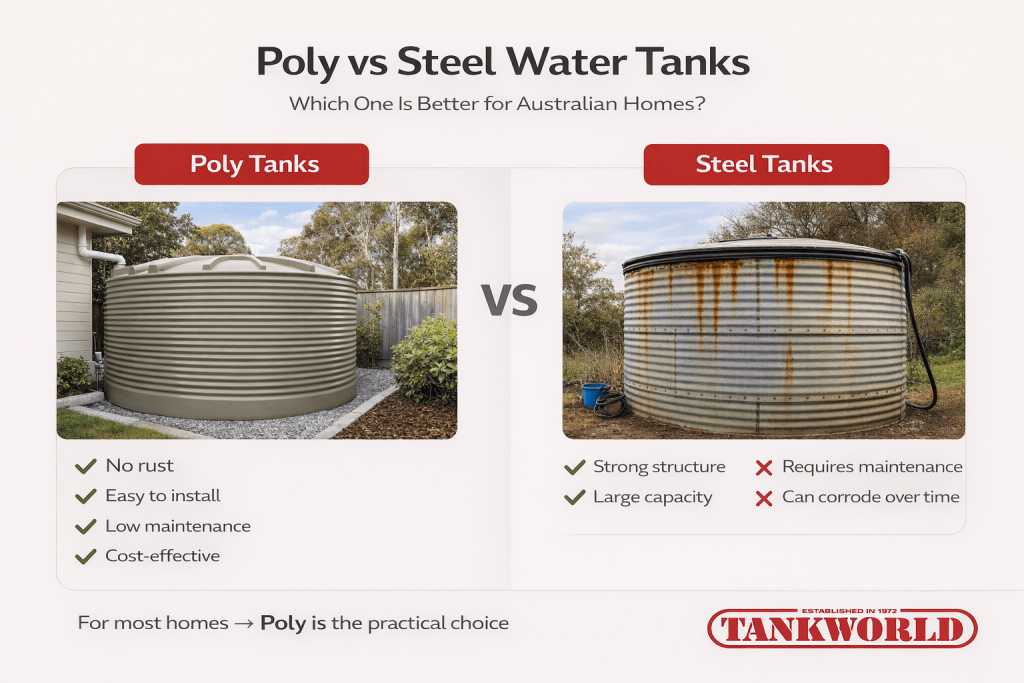
- Polyethylene: cost-effective, UV-stabilised and available in a wide range of shapes and colours.
- Steel: premium look, strong and often preferred for some bushfire applications.
- Concrete: very durable, but heavy and more expensive to install.
👉 If you want a closer comparison, read our guide on poly vs steel water tanks to see which option is best for your property.
Poly Water Tanks (Most Popular)
Poly tanks are the best all-round choice for most Australian homes. Made from UV-stabilised, food-grade polyethylene, these tanks combine strength, safety, and flexibility at an affordable price.
✅ Key Benefits of Poly Tanks
- Rust and corrosion proof: Poly tanks don’t rust, even in coastal or humid areas. That means cleaner water and no internal coatings to maintain.
- Lightweight and easy to install: Transport and setup are simple; no cranes or heavy equipment needed.
- Cost-effective. Generally, 30-50% cheaper than steel or concrete, without compromising on quality.
- Wide variety: Available in round, slimline, underground, and modular designs. Perfect for tight spaces or modern homes.
- Low maintenance: A quick rinse and leaf strainer clean every few months is all that’s required.
- Durable in harsh conditions: UV protection prevents fading and cracking under Australia’s intense sun.
- Bushfire-ready options: With metal outlets and correct placement, modern Poly tanks can safely store firefighting water in bushfire-prone regions.
Our customer review: “Our 25,000 L Poly tank has been through two hot summers and a nearby grassfire – still looks brand new.” – Wayne T., Shepparton VIC
👉 Poly water tanks are the most popular choice across Australia. You can browse our poly water tanks to find the right size and style.
Steel Tanks – Strong but Needs Care
Steel tanks have a long reputation for durability and bushfire resistance, and they do offer a premium look that some homeowners prefer.
- However, steel tanks come with trade-offs:
- They can corrode over time, especially near the coast or in acidic soils.
- Many require internal liners (often plastic anyway) that eventually need replacement.
- They’re heavier, harder to install, and often cost more to deliver.
- Expansion and contraction in hot climates can lead to seam stress or coating cracks.
- Best suited for: Large rural blocks or areas with strict bushfire storage requirements where visual appeal and fire rating outweigh cost.
Concrete Tanks – Durable but Costly & Heavy
Concrete tanks are known for their long lifespan (30+ years) and robust structure, making them ideal for underground or industrial applications.
- But for most homes, they’re not practical:
- Very heavy: Requires cranes and reinforced pads for installation.
- High upfront cost: Among the most expensive options per litre.
- Can crack or leach minerals into the water over time.
- Difficult to relocate or replace if damaged.
- Best suited for: Commercial, agricultural, or high-volume storage where long-term underground stability is essential.
Step 3: Choose the Right Tank Shape

Perfect for urban homes with limited space. They fit neatly alongside fences or garages. Capacities typically range from 330L to 5,000L Water Tank.

Common in both urban and regional areas. Available in small to large capacities (1,000L – 47,750L+ Water Tank).

Installed below ground for discreet storage. Ideal for urban blocks with limited space. Requires professional excavation and installation.
Step 4: Choose placement
Urban & Suburban Properties
- For smaller blocks, small rainwater tanks or slimline tanks fit neatly beside the house or fence, providing practical storage without taking up valuable yard space.
- Where space is extremely tight, underground tanks keep water storage completely out of sight, ideal under driveways or lawns.
- Best for: Homes with limited space or where appearance matters.
👉 Most homes benefit from 5,000L water tanks for everyday use.
Rural & Regional Properties
- Rural properties need a big capacity.
- That’s where large round corrugated tanks shine:
- Lowest cost per litre of any tank style
- Strong, bushfire-resistant, and easy to repair
- Classic rural look in capacities up to 250,000 L
- Best for: Farms and acreages needing large, cost-efficient water storage.
👉 For rural homes and acreage properties, our farm water tanks for sale include larger storage options for household backup, gardens, sheds and livestock support. You can also check the 10,000L rainwater tanks for a smaller size with a more cost-effective storage solution.
Step 5: Check local regulations
- Small tanks usually do not require approval
- Larger systems or plumbing connections may need approval
- Always check your local council requirements in New South Wales, Victoria or South Australia
Installation & Maintenance
Installation Basics
- Level base (sand or concrete)
- Proper connection to gutters
- First flush diverter for cleaner water
- Pump system for pressure
Correct installation is critical for long-term performance and safety. If you are unsure about base preparation, plumbing connections or compliance requirements, read our water tank installation guide for a step-by-step breakdown of how to install your tank properly.
Maintenance Tips
- Clean gutters and leaf strainers every 3 to 6 months.
- Check for leaks or cracks
- Clean the tank every 2 to 3 years
Why Invest in a Water Tank?
- Save Money: A rainwater-to-mains water changeover system can reduce mains water usage by up to 60,000 litres per year.
- Improve Sustainability: Every litre saved reduces strain on dams and mains supply. Tanks also help in water-restricted periods.
- Bushfire Ready: Reliable water source for firefighting, especially in regional areas with higher bushfire risk.
- Increase Property Value: Homes with sustainable features (like rainwater tanks) add long-term appeal to buyers
Which Water Tank is Best for Your Property?
- For Homes: 5,000L to 10,000L poly tanks
- For Rural Properties: 20,000L to 47,750L tanks
- For Bushfire Areas: Tanks with pumps and fire fittings
Water Tank FAQs | Sizes, Prices, Lifespan & Bushfire Use
Which water tank is best for households?
Most Australian homes need a 5,000L to 10,000L water tank, depending on roof size, rainfall, and water use.
Smaller homes may use 1,000L to 3,000L, while rural properties or bushfire storage often require 20,000L or more. Compare sizes in our water tanks range
What is the best water tank size for a family?
What is the best water tank size for a family?
A 5,000L to 10,000L water tank is ideal for most Australian families.
How much does a water tank cost in Australia?
Water tank prices in Australia start from around $350 and can exceed $7,400 for large tanks.
Prices increase with larger capacities, delivery distance, pumps and installation requirements.
How long do water tanks last in Australia?
Most water tanks last 15 to 30 years, depending on the material and conditions.
Poly tanks typically last 15 to 25+ years, while steel and concrete tanks can last longer with proper maintenance.
Is a rainwater tank worth it in Australia?
Yes, rainwater tanks can reduce water bills, improve water security and provide a backup supply during droughts or restrictions.
They are especially valuable in rural areas and regions with variable rainfall.
What is the best water tank for bushfire areas?
Both poly and steel water tanks are suitable for bushfire areas when installed correctly.
Many homeowners choose poly tanks because they are corrosion-resistant and can be fitted with fire-fighting pumps and outlets.
Do you need council approval for a water tank in Australia?
Small water tanks often do not require council approval, but larger systems may.
Requirements vary by local council, especially for plumbing connections or large installations.
How much rainwater can you collect from your roof?
You can collect around 80% to 90% of rainfall from your roof, depending on roof size and system efficiency.
For example, a 100 m² roof can collect up to 80,000 litres per year in areas with 1,000mm of annual rainfall.
Ready to Choose Your Tank?
Browse Tankworld’s full range of water tanks from 330 litres to over 47,750 litres, designed for Australian homes, farms and businesses.
👉 Explore our water tanks for sale and find the perfect solution for your property.
-
$2,795.00 – $3,070.00
$2,795.00 – $3,070.00
$3,020.00 – $3,295.00
-
$940.00 – $1,105.00
$940.00 – $1,105.00
$940.00 – $1,105.00
-
$965.00 – $1,075.00
$965.00 – $1,075.00
$1,040.00 – $1,150.00
-
$1,840.00 – $2,005.00
$1,840.00 – $2,005.00
$1,840.00 – $2,005.00
Author
Digital Marketing Coordinator at Tankworld, specialising in SEO, advertising, and brand growth for Australia’s leading water tank manufacturer. With over 7 years of digital marketing experience, a Bachelor of Communication, and a passion for sustainable living, Diana helps Australians discover smarter water-saving solutions.